Showing posts with label World news. Show all posts

Sunday, 17 April 2011

Pakistan, Afghanistan push for reconciliation as ties warm up


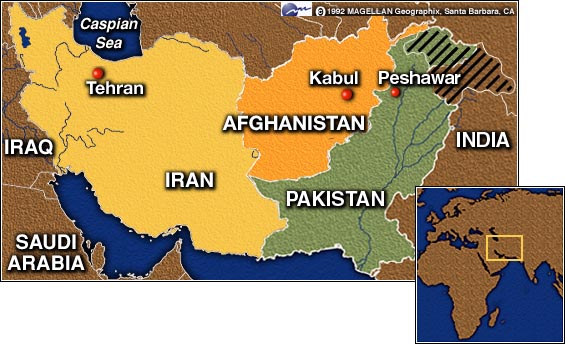
ISLAMABAD, April 17 (Xinhua) -- Pakistan and Afghanistan have found a new path in their warm up bilateral relations, particularly with the formation of a high level joint peace and reconciliation commission to push the peace process in the war- shattered country.

Afghan President Hamid Karzai and Pakistani Prime Minister Yusuf Raza Gilani Saturday agreed to establish the two-tier Afghanistan-Pakistan Joint Commission for facilitating and promoting reconciliation and peace.

The first tier of commission will include the chief executives, foreign ministers along with chiefs of the military and intelligence services of the two countries while the second tier will comprise senior officials of foreign ministries, military and intelligence services.

Chairman of Afghanistan's High Peace Council, Professor Burhanuddin Rabbani, welcomed the establishment of the Afghanistan- Pakistan Joint Commission for facilitating and promoting reconciliation and peace. Rabbani, an ethnic Tajik and former Afghan President, who had always been critical of Pakistan's role but his visit to Pakistan in January highlighted Pakistan's key role in the Afghan reconciliation process.

The commission reflects a positive change in bilateral relations as now Afghan leadership recognized Islamabad's role in the reconciliation process when the American troops are set to begin withdrawal of its forces in July and Afghan forces will gradually take over the security responsibility, analysts said.

Pakistan's role is considered as a key to Afghan reconciliation as the country still has influence on the Afghan Taliban. Islamabad had announced in February last year that it has reached the Afghan Taliban, the declaration was welcomed by certain quarters as Pakistan is thought to be the only country to convince the Taliban to come to the negotiation table.

Prime Minister Gilani's visit to Afghanistan, the second in four months, was unique as for the first time the top military leadership joined the PM entourage to tell the world community that the political and military leadership are united.

The U.S. and Afghan authorities had been critical of the role of Pakistan on Afghan issues in the past. And they even accused elements in Pakistan's military establishment of supporting Taliban insurgents in Afghanistan. A White House report accused Pakistan of avoiding "direct conflict" with al-Qaeda and Afghan Taliban in North Waziristan tribal region.

Gilani's stand that Islamabad will back the Afghan-led reconciliation process may be welcomed in Afghanistan as Afghans are very sensitive about any foreign intervention in its internal affairs. The announcement may also help in removing the mistrust among the Afghans about Pakistan's policies.

There is another logic behind the fast growing high level interaction between Pakistan and Afghanistan to counter what Islamabad has described as a new "great game" in Afghanistan. Pakistani leaders have not publicly defined the great game but political analysts are of the opinion that it is the U.S. intentions for future to use Afghan soil against Iran and other countries.

The U.S. quest for permanent bases in Afghanistan has also raised many questions as to why Washington is looking for permanent bases if President Obama has announced a phased withdrawal. People in Pakistan and Afghanistan still remember the U.S. regional role in the past that it had turned back to the region after the withdrawal of former Soviet forces in 1989.

The economic aspect of Gilani's day-long visit to Afghanistan was also very important when he gave reference to several important mega projects, including trans-regional projects, such as the Turkmenistan-Afghanistan-Pakistan-India Gas Pipeline, building of electricity transmission lines, enhancing physical connectivity by building or upgrading requisite infrastructure, as well as expediting the implementation mechanisms for the Afghanistan-Pakistan Transit Trade Agreement, that need to be fast- tracked.

Source-Xinhua

Gaddafi exit from Libya is a global aim, says Cameron


David Cameron has claimed that "virtually every country around the world" wants Colonel Gaddafi to step down as leader of Libya.

Dismissing suggestions that the anti-Gaddafi coalition had changed its war aims, the prime minister said that when he joined the presidents of the US and France in publishing a joint article saying that Gaddafi would have to go, the three leaders were merely expressing world opinion.

"If you stop and think about it, the idea that at the end of all this somehow you could keep in place Colonel Gaddafi, who is even as we speak right now murdering his own civilians in Misrata – the idea that he's got a part to play in the future of Libya must be wrong," Cameron said.

The publication of the joint article on Friday prompted calls for the recall of parliament, on the grounds that it implied regime change was now the main goal of the coalition. In an interview with Sky News on Sunday, Cameron rejected this analysis.

"We can only fulfil what is in the UN security council resolutions, but that doesn't stop us together as we have done, President Obama, President Sarkozy and I – but also virtually every prime minister in every country around the world – saying that Libya should be able to have a free and democratic future determined by themselves; it's hard to believe they'd choose one with Colonel Gaddafi still around," Cameron said.

Cameron said that there was "no question of an invasion or an occupation" under the terms of the UN resolution and that this was making fighting the conflict "more difficult in many ways" for the coalition. But the coalition was supplying the rebels with non-lethal material, such as body armour and communications equipment, he said.

"There's no doubt in my mind that Colonel Gaddafi is still intent on murdering people in Misrata and taking control of that large city and also pushing towards Benghazi, where I'm sure, if he ever got there, there would be a bloodbath," Cameron said.

"We should be taking all the necessary steps to stop that from happening and to save civilian life."

Source-guardian.co.uk

Mubarak still in Sharm El-Sheikh hospital: state media


CAIRO, April 17 (Xinhua) -- Egyptian former President Hosni Mubarak is still in Sharm El-Sheikh Hospital along with his wife Suzanne, Egypt's state news agency MENA quoted an official source as saying on Sunday.

On the contrary, Egypt's al-Ahram newspaper reported on its website Saturday that Mubarak has been transferred by a military helicopter to the International Medical Center, some 42 km east of the capital Cairo, and he will stay there until the end of his interrogation on charges of corruption and ordering the killing of protestors.

Mubarak was sent to the Sharm El-Sheikh hospital on Tuesday after suffering heart problems while being interrogated by prosecutors.

Egyptian Prosecutor General Abdel-Meguid Mahmoud on Wednesday ordered a 15-day detention for Mubarak on charges including the ordering the killing of protesters, embezzlement of public funds and abuse of power.

The prosecutor general issued on Friday a decision to move Mubarak to a military hospital.

Mubarak's two sons, Alaa and Gamal, were sent to the Tora prison in Cairo on Wednesday awaiting investigations.

Source-Xinhua

Japan nuclear emergency at Fukushima to continue for six to nine months


It was the first time that Tokyo Electric Power company (Tepco) has given a clear timeline for repairing the damage at the plant, and came after repeated complaints at the lack of clear information about the situation.

A phased plan will first target a “cold shutdown” of the plant’s reactor cores, when temperatures are brought down under 100 degrees C.

In the second step, 60,000 tons of radioactive water that currently flood the plant will be “decreased” and decontaminated. Meanwhile the entire building will be covered with a special structure to stop radioactive material escaping.

Finally, the radiation that has spread across the 20km (12 mile) evacuation zone will be reduced and tens of thousands of residents allowed to return. The chairman of Tepco admitted that he did not know when that might happen, but Banri Kaieda, Japan’s trade minister, said some could return home within six to nine months.

"We sincerely apologize for causing troubles," said Tsunehisa Katsumata, Tepco’s chairman. "We are doing our utmost to prevent the crisis from further worsening."

There has been mounting criticism of Tepco and the Japanese government at the lack of transparency over the plant and over the nuclear industry in general.

Tepco has already been repeatedly accused of falsifying safety data even before last month’s earthquake. At the same time, the Japanese government was reported to have withheld data showing that radiation exceeded safe levels more than 18 miles from the plant, beyond the established safety zone.

In Fukushima, locals complained that the government’s decision to suddenly and inexplicably raise the alert level at the plant two notches to seven, the same level of seriousness as the Chernobyl disaster, has created a maelstrom of rumours.

As a result, there have been reports of people from Fukushima being turned away from hotels in other parts of Japan, and of the total collapse of the region’s farming industry. “The rumours are so harmful that it is not just farming and fishing that has been affected, some people are saying that even machines are contaminated!” said Shimoyamada Matsuto, a spokesman for Iwaki city’s disaster management team.

“The radiation problem is not as serious as the spread of fear,” said Midori Aoki, a 21-year-old student from Iwaki, which lies 30 miles from the nuclear plant. “People do not know what to believe and what to trust,” she added.

About 630,000 terabecquerels of radiation are estimated to have been leaked at the plant. More than five million terabecquerels were released by Chernobyl.

Hillary Clinton, the US secretary of State, arrived in Tokyo on Sunday on a trip designed to show solidarity with the US’ most important ally in Asia. “We pledge our steadfast support for you and your future recovery. We are very confident that Japan will demonstrate the resilience that we have seen during this crisis in the months ahead,” she said, after meeting Takeaki Matsumoto, the Foreign minister.

Source-telegraph.co.uk

Saturday, 16 April 2011

Libya conflict: Nato summit fails to secure new planes


A Nato meeting of foreign ministers on Libya has ended without a commitment from allies to send more strike planes.

Neither the US nor Italy have indicated they will respond to calls to join ground attacks.

Nato Secretary General Anders Fogh Rasmussen said the threat to Libyan civilians would not disappear while Col Muammar Gaddafi was still in power.

Reports suggest pro-Gaddafi forces have been using cluster bombs against the rebel-held city of Misrata.

New York-based Human Rights Watch said its officials had seen the internationally banned munitions - which are dangerous to civilians because they scatter small bomblets over a wide area - fired in residential areas of the western city.

A Libyan government spokesman denied the reports.

United front

Nato pilots are enforcing the current UN resolution to establish a no-fly zone and to protect civilians in Libya, which has effectively been split between forces for and against Col Gaddafi since a revolt against his rule began in mid-February.

The current UN resolution makes no mention of regime change, but an open letter by the US, UK and French leaders on Friday said there could be no peace while Col Gaddafi was in power.

At the Berlin conference, Mr Fogh Rasmussen said there were indications that allies would provide extra strike aircraft needed for the operation in Libya.

"We have got indications that nations will deliver what is needed... I'm hopeful that we will get the necessary assets in the very near future," he said.

But although US President Barack Obama said the US and Nato had averted "wholesale slaughter" with their campaign, he added that despite a military stalemate in Libya, there was no need for greater US participation in enforcing the UN-mandated no-fly zone.

Italy - which is thought to have been identified as a key potential contributor - also seemed to rule out ordering its aircraft to open fire.

Rome has made air bases available for Nato forces, but the eight aircraft it has supplied to the effort are only being used for reconnaissance and monitoring.

"The current line being followed by Italy is the right one and we are not thinking about changing our contribution to the military operations in Libya," Reuters reported Italian Defence Minister Ignazio La Russa as telling reporters in Rome.

Meanwhile, Russian Foreign Minister Sergei Lavrov suggested Nato was exceeding its UN mandate, and called for an immediate shift in its policy.

"We believe it is important to urgently transfer things into the political course and proceed with a political and diplomatic settlement," he told a Berlin press conference.

Only a few of Nato's 28 members - including France, the UK, Canada, Belgium, Norway and Denmark - are conducting air strikes.

In their open letter published earlier on Friday, Barack Obama, David Cameron and Nicolas Sarkozy said Nato must maintain military operations to protect civilians and maintain pressure on Col Gaddafi.

To allow him to remain in power would "betray" the Libyan people.
Inside the crowded Misrata hospital

The letter from the three leaders, published in the UK's Times newspaper as well as the International Herald Tribune and France's Le Figaro, was an attempt to show a united front against Col Gaddafi.

In an interview later with Associated Press, the US president said Col Gaddafi was "getting squeezed in all different kinds of ways", and was running out of money and supplies.

But French Defence Minister Gerard Longuet suggested a new UN Security Council resolution would be needed for Nato allies to achieve their goals in Libya.

Speaking on French radio, Mr Longuet conceded that ousting Col Gaddafi would be "certainly" beyond the scope of the existing UN Security Council Resolution 1973 on Libya, and could require a new council vote.

"Beyond resolution 1973, certainly it didn't mention the future of Gaddafi but I think that three major countries saying the same thing is important to the United Nations and perhaps one day the Security Council will adopt a resolution."

Rebels holding out

While politicians debated the way forward, fighting on the ground and Nato bombing missions have continued.

Libyan state TV reported Nato air strikes had hit the cities of Sirte - Col Gaddafi's birthplace - and Aziziya, south of the capital Tripoli.

There were also reports of rocket strikes by pro-Gaddafi forces on the western rebel-held city of Misrata, as well as cluster bomb attacks on the city.

Steve Goose, HRW's arms division director, said it was appalling that Libya was using the munitions in residential areas.

The bombs, which have been banned under the terms of an international convention since last August, generally leave large numbers of unexploded submunitions on the ground, where they continue to pose a risk to civilians, especially children.

HRW researchers said they had retrieved fragments of a Spanish-made 120mm-mortar projectile, which opens in mid-air and releases releases 21 submunitions over a wide area.

Spanish officials have yet to comment on these reports. Spain ratified the convention against cluster munitions two years ago, but the fragments found in Misrata were apparently produced in 2007.

Rebels in Misrata have been holding out against attacks for two months, but UK Foreign Secretary William Hague stressed that Nato needed to act swiftly to prevent a "massacre" in the city.

He said Nato had been constrained by the need to avoid civilian casualties but had probably prevented the city from being overrun by Col Gaddafi's forces.

The BBC's Orla Guerin in Misrata said staff at a hospital there were battling to treat civilians injured by mortars and rocket fire.

Sourcr-bbc.co.uk

Taliban claims responsibility for attack on base


A suicide bomber wearing an Afghan security forces uniform blew himself up on Saturday at the entrance to a military base in eastern Afghanistan, killing at least four Afghan soldiers, officials said.

The Taliban claimed responsibility for the attack.

Militants have conducted an increasing number of attacks in the east and north since many of them were routed from their strongholds in the south by an influx of tens of thousands of U.S. and NATO forces last year.

Afghan Defence Ministry spokesman Gen. Mohammad Zahir Azimi said a man on foot detonated his vest packed with explosives about 7-30 a.m. local time at the entrance to the base west of Jalalabad, which is shared by Afghan and coalition forces.

“The attacker had the Afghan security force uniform on and that gave him the opportunity to reach the entrance to the base and carry out the attack,” Gen. Azimi said.

NATO, for its part, has not yet disclosed any information about the attack in Qarghayi district of Laghman province.

Baz Mohammad Sherzad, the director for health in nearby Nangarhar province, said the bodies of the four Afghan soldiers were brought to a hospital in Jalalabad. He said others were wounded in the blast.

In an e—mail to reporters, Taliban spokesman Zabiullah Mujahid said the bomber was from Day Kundi province in central Afghanistan.

“A month ago, he joined with the Afghan army and his aim was to carry out the suicide attack,” Mujahid said. “Today, when there was a meeting going on between Afghan and foreign soldiers, he used the opportunity to carry out the attack.”

He said 12 foreign troops and 14 Afghan soldiers were killed in the attack. The Taliban often exaggerates casualties caused by their attacks.

Source-thehindu.com

Wednesday, 9 March 2011

Economies prosper when women given equal opportunity: Obama

WASHINGTON: History shows that when women and girls have access to opportunity, societies are more just, economies are more likely to prosper and governments are more likely to serve the needs of all their people, US President Barack Obama has said on the occasion of 100th anniversary of International Women's Day.

"That is why my administration has stood up for gender equality and women's empowerment around the world and demanded an end to sexual and gender-based violence," Obama said.

"It's why we're developing a plan to promote women's meaningful participation in conflict prevention and resolution in war torn societies. And it's why we are working to advance these goals and our national interests by strengthening the role of women in every aspect of our foreign policy," he said.

"In the US and around the world, we will not rest until our mothers, sisters and daughters assume their rightful place as full and equal members of a secure, prosperous and just world," Obama said.

On the International Women's Day, the world celebrates the extraordinary gains made by women over the past century and the women pioneers who made them possible and we reaffirm our unwavering support for the rights, security, dignity and opportunity of all women around the world.

"Today reminds us that across countries and cultures, people everywhere, women and men, share rights and aspirations that are universal, among them the freedom to chart their own destiny, to raise their children free from violence and to live in societies that value their voice and respect their will," Obama said.

Suicide bombing kills 34 in Peshawar funeral

Islamabad, March 9 (IANS) At least 34 mourners were killed and 42 injured Wednesday in a suicide attack at a funeral near Pakistan's Peshawar city, media reports said.

The blast occurred in Adezai area of Peshawar city, the capital of Khyber Pakhtunkhwa province bordering Afghanistan, Geo News reported.

About 150 people were attending the funeral of the wife of a pro-government tribal leader when the explosion took place in Adezai area, around 20 km southeast of Peshawar, DPA said.

Adezai is a village where a militia group called Aman Lashkar is supporting the government in the fight against the Taliban, the report said.

'It was a suicide attack,' said Siraj Ahmad, a senior government official in Peshawar. 'Thirty-four people are dead and 42 injured.'

A witness told Geo television that the lone suicide bomber was about 35 to 40 years of age and he shouted 'God is great' before detonating the explosives.

Another witness said the blast threw him to the ground. 'When I got up I saw there were bodies lying everywhere.'

The suicide attack came a day after a car bomb near the office of the military's Inter-Services Intelligence agency killed 26 people and injured 131 in Faisalabad, a key industrial city in Punjab province.

The Taliban took responsibility for the Tuesday's bombing.

Nasim Sadiq, the top government official in Faisalabad, said Wednesday that around 200 kg of explosives were detonated by remote control.

'They had parked the vehicle near the compressor of a CNG (compressed natural gas) station and wanted to blow up the compressor,' Sadiq was quoted as saying.

Gadhafi Says Foreign Elements Responsible for Libya Uprising

Libyan leader Moammar Gadhafi is repeating his claim that foreign operatives are responsible for the uprising against his government.

Addressing a group of people from the town of Zentan, Gadhafi blamed outside elements from Afghanistan, Algeria, Egypt and the Palestinian territories for the rebellion. The remarks were broadcast on state television Wednesday.

Troops loyal to Gadhafi attacked the rebel-held city of Zawiya for a fifth day Tuesday, part of renewed assaults aimed at reclaiming ground lost to rebel forces. Eyewitnesses said the city, 50 kilometers west of the capital, came under heavy mortar fire.

Rebel officials in the city said dozens of people have been killed in the assault and hundreds wounded, including women and children.

The various reports could not be independently confirmed because electricity, phone and Internet services in Zawiya have all been cut.

To the east, much of which is under opposition control, Libyan warplanes carried out several airstrikes on anti-government positions around the key oil port of Ras Lanuf. The city was bombed heavily as pro-Gadhafi forces targeted the town's water reservoir among other installations. But as of late Tuesday, rebel officials said they still controlled the area.

Anti-government forces are seeking to recapture the city of Bin Jawad, 160 kilometers east of Gadhafi’s hometown of Sirte, after pulling out in the face of reinforced government troops.

Opposition leaders based in the eastern city of Benghazi initially suggested they made an amnesty offer to Gadhafi, but later denied any back-channel negotiations were under way. A spokesman for the rebel National Libyan Council, Abdul Hafidh Ghoga, said the group is not prepared to negotiate.

Ghoga called again for foreign powers to impose a no-fly zone over Libya and effectively ground Gadhafi's air force.

Rebel representatives said they have had contacts with some foreign governments, and have sent envoys to several European cities seeking support. An Italian diplomatic delegation was in Benghazi Tuesday meeting with opposition leaders. It was the first official public visit by Western diplomats since the establishment of the provisional rebel government.

But activists say the Benghazi council's authority remains tentative and has yet to unite with disparate, divided opposition groups abroad.

A council official told European officials Monday that Gadhafi is relying on his air force because he lacks adequate ground troops to put down the uprising. Mahmoud Jebril said the Libyan leader relies largely on security brigades led by his sons and loyal officers.

Monday, 7 March 2011

Ivorian rebels capture major town

Cote d'Ivoire's rebels say they have captured a town after a fierce battle in the country's volatile west near the border with Liberia, triggering panic among tens of thousands of refugees already fleeing violence over a deepening political crisis.

The New Forces rebels said in a statement on their website that they seized Toulepleu on Sunday.

The statement said: "The large town of Toulepleu in the west of Ivory Coast is now in the hands of the army of the New Forces (rebels) since Sunday at noon following an intense combat."

The town near Liberia's border was the scene of heavy fighting on Sunday between forces backing the political rivals who both claim to be Ivory Coast's president months following a disputed election.

The rebels are backed by the UN-recognised president, Alassane Ouattara, while government forces are allied with Laurent Gbagbo, who is refusing to step down.

Gbagbo has been in power for more than a decade and his security forces - who insist they are still holding Toulepleu - are accused of abducting, torturing and killing political opponents.

Saah Nyuma, the deputy director of the Liberia Refugee Repatriation and Resettlement Commission, said he heard the sounds of explosions coming from Ivory Coast and that at least one mortar shell fell on the Liberian side of the border on Sunday.

Analysts fear the political crisis could spill over into a full-blown civil war.

Nearly 400 people have been killed since the November 28 vote, according to a UN and an Associated Press tally of bodies.

The UN refugee agency says more than 200,000 people have fled fighting in Abidjan in the last week, and more than 70,000 have crossed the border into Liberia to avoid fighting in the country's west.

Over the weekend, gangs of young people aided by uniformed police ransacked houses in Abidjan belonging to officials allied with Ouattara.

And on Thursday soldiers fatally shot six women who were protesting against Gbagbo's refusal to step down.

Governments around the world swiftly condemned the killings, with Britain's foreign office minister for Africa, Henry Bellingham, saying he was "deeply concerned" about the deteriorating security situation in Cote d'Ivoire.

He also said he was "appalled" to hear that women were killed during a peaceful demonstration.

Profile: Egyptian Prime Minister Essam Sharaf

Having joined the protests in Tahrir Square that toppled President Hosni Mubarak on 11 February, he is a popular figure with Egypt's young revolutionaries.

The 59-year-old former transport minister was named Egypt's new prime minister on 3 March by the country's military rulers.

He replaces Ahmad Shafiq, appointed by Mr Mubarak in the dying days of his regime and roundly rejected by the opposition forces.

The US-educated civil engineer is now tasked with leading the country's transition to democracy.

Addressing crowds of supporters in Cairo's central Tahrir Square a day after his nomination, Mr Sharaf said he derived his legitimacy from the people.

"The task I am trying hard to achieve is to meet your demands, and I will do my best. If I will not be able to fulfil your demands at any time, I will be here [among the crowds of protesters] not here [on the podium]," he told the crowd.

Egypt's largest opposition group, the Muslim Brotherhood, and the secular 6 April Youth Movement, have both welcomed Mr Essam's appointment to the post.
Man of science

Essam Abdulaziz Sharaf was born in Giza governorate in 1952.

He gained a bachelor's degree in civil engineering at Cairo University before completing a doctorate at Purdue University in the US in 1984.

He went on to work as an assistant professor of engineering at Cairo University and King Saud University in Saudi Arabia until his appointment as premier.

During his time in academia, he also acted as a transportation consultant for governments in the UAE, Saudi Arabia and Egypt.

For a brief period from mid-2004 to 2005, he served as transport minister in the former cabinet of Ahmad Nazif and was credited with raising workers' salaries and sacking corrupt officials.

Although he refuses to comment on why he resigned, it was reported that he was unhappy with mismanagement and corruption under Mr Mubarak.

Despite severing official ties with the government in 2005, he stayed on as a chief member of the ruling National Democratic Party until last year.

But he actively supported the revolution, even leading marches in the capital by members of Cairo University's faculty of engineering.

Although a man of science, he is seen as pragmatic, honest and capable of implementing reforms.

Mr Sharaf is also known for his tough stance towards Israel. According to local press reports, he does not support any economic or academic co-operation between Egypt and Israel.

"I am against normalisation of relations with Israel in any area, even in the area of scientific research," he told the independent daily al-Masry al-Youm last year, citing the cases of Palestinian prisoners held in Israeli jails and "fundamental differences" between the two sides.

Other regional issues he has been vocal about include the ongoing dispute with African nations over water from the Nile.

Qaddafi Forces Begin New Air Attack in East

AL UQAYLAH, Libya — Government forces began a new air attack on rebels on Monday in the coastal town of Ras Lanuf, where they had withdrawn after Sunday’s assaults.

The rebel forces were seeking to regroup but needed reinforcements, Mohamad Samir, an army colonel fighting with the rebels, told The Associated Press.

On Sunday, troops loyal to Col. Muammar el-Qaddafi had attacked rebel troops in the coastal town of Bin Jawwad using tanks, helicopters and fighter planes, and pushed them east, stalling, for the moment, hopes by the antigovernment fighters of a steady march toward Tripoli.

That attack began at about 9 a.m. on Sunday, said rebel fighters, who had to retreat down the main coastal road under a barrage of artillery shells, missiles and sniper bullets. Outgunned, the rebels fanned out in the desert and fought back, only to be forced to retreat again.

By 9 p.m., the road east from the city was full of fleeing rebel cars, including several pickup trucks mounted with heavy weapons. More than a dozen ambulances, ferrying wounded and dead rebel fighters, sped toward a hospital in a nearby town. Ambulance drivers and doctors said at least 10 people had been killed, though they expected that number to rise once they were able to reach Bin Jawwad.

A journalist for France24 television was wounded during the fighting, according to a photographer who saw him at a local hospital.

Outside of nearby Ras Lanuf, weary fighters gathered at gas stations, drank milk distributed by volunteers and tore at loaves of bread. Mahmoud Bilkhair, an army second lieutenant fighting with the rebels, sat in his car with other fighters, exhausted and staring out the window.

“We’re trying,” he said. “We’re not advancing. We can’t do anything about it.” But he and other fighters said they would regroup and return to Bin Jawwad.

The rebel defeat, just a day after they celebrated a major victory in taking the oil port at Ras Lanuf, fit into the emerging, grueling rhythm of a conflict where the combatants claim no clear advantage and fight, repeatedly, over a handful of prizes.

In the east, the rebels, full of enthusiasm but short on training and organization, are trying to capture Surt, a stronghold of Colonel Qaddafi that blocks the rebel path to Tripoli. They are also fighting to hold onto the city of Zawiyah, west of Tripoli, where they have accused the loyalists of committing a massacre.

Government troops, having ceded large, strategic parts of the country in recent days, are better armed but still on the defensive as they try to undo rebel gains.

The standoff in Zawiyah continued there on Sunday, a day after forces loyal to Colonel Qaddafi waged a heavy assault toward the city center, then pulled back to close off all roads out.

Rebels in nearby towns said mobile phone service to Zawiyah had been cut off completely and landline service was intermittent, making it hard to gather information. Secondhand reports through rebel networks on Sunday indicated Libyan Army tanks had once again moved into the center of the town.

An hour before dawn on Sunday, Tripoli also erupted in gunfire, the sounds of machine guns and heavier artillery echoing through the capital. It was unclear what set off the gunfire, but quickly, Qaddafi supporters took to the streets, waving green flags and firing guns into the air. Crowds converged on Green Square for a rally, with many people still shooting skyward.

Refugees continued to flee to neighboring countries, sometimes with tragic consequences. The authorities in Crete said that at least three Bangladeshi evacuees from Libya died Sunday after they tried to swim from a Greek ferry toward the island.

As of Friday, about 192,000 people had fled the country, according to the International Organization for Migration. Of those, 104,000 people had crossed into Tunisia and about 87,000 had fled to Egypt. More than 5,000 people are stranded at Libya’s border with Egypt, the organization said, including many Bangladeshis and Sub-Saharan Africans.

Eight British Special Forces soldiers were briefly taken captive by Libyan rebel forces in the east of the country, according to British news reports on Sunday.

The soldiers, from the elite Special Air Service, had been part of a team escorting a British diplomat to meet with Libyan rebels, according to The Sunday Times of London, which first reported on the incident. The newspaper cited anonymous Libyan and British sources and said the men had been held at a military base over the weekend.

Further reports later Sunday suggested that the eight men had been released and were aboard the Cumberland, a Royal Navy ship off the coast of Libya.

The British foreign secretary, William Hague, confirmed in a statement that “a small British diplomatic team” in Benghazi, a rebel-held city in eastern Libya, tried to “initiate contacts with the opposition” but “experienced difficulties, which have now been satisfactorily resolved.”

“They have now left Libya.” Mr. Hague said. The government declined to immediately provide further details.

As rebel leaders have pressed their efforts to form a shadow government in recent days, the focus of the revolutionaries, and their supporters, has shifted from Benghazi toward the fighters making their way west.

After successfully capturing Ras Lanuf, hundreds, and perhaps more than 1,000 rebel fighters were in Bin Jawwad overnight on Saturday. They managed to briefly push farther west, but came under a fierce attack about 9 a.m., the fighters said.

For most of the day, the battle raged in a small area east of the city. Rebel fighters fanned out along the sides of a road, sending squad-size units into the rocky terrain and small hills along the two-lane road in an effort to keep the loyalists from flanking them.

By nightfall, government forces seemed to have firm control of a small town and factory about a half mile east of Bin Jawwad. With mortars, heavy machine guns and tanks, they bombarded rebel positions for hours.

Air strikes pounded the area through the day, and attack helicopters fired on rebel gatherings. There were lingering questions about the intentions of some of the pilots, who seemed to have missed easy targets in recent days. Early on Saturday, a warplane dropped a bomb east of Ras Lanuf, but it did not explode. Later, the plane bombed the same position again, but missed.

On the outskirts of Ras Lanuf on Sunday, the bodies of two pilots could be seen in the wreckage of their downed jet, which the rebels claimed they shot down on Saturday. The debris was scattered for hundreds of yards around the pilots, and one of them appeared to still be wearing his Libyan Air Force uniform.

In interviews, rebel fighters said the loyalists were using residents of Bin Jawwad as human shields, making women stand next to their houses. The rebels said they held back their fire as a result. But witnesses said that the rebels seemed to use every weapon at their disposal, including Katyusha rockets, multiple grenade launchers and antiaircraft guns as they tried to dislodge the loyalists. It was not enough.

Rebels have said they have been attacked repeatedly by foreign mercenaries hired by Colonel Qaddafi. But after the battle in Bin Jawwad, several rebel fighters said that though they saw mercenaries, many of the soldiers they faced were Libyans, wearing army uniforms. They said that for much of the day, it had been hard to determine who was firing at them, as they ran from repeated shellings.

As the rebels fell back, witnesses reported seeing bodies on the road. Rebels gave their own estimates of the dead: one man said he had seen two bodies, another said he had seen seven. Throughout the afternoon, there were rumors that reinforcements would be coming from Benghazi to help retake Bin Jawwad.

As the rebels retreated, they stopped to pick up about a half-dozen Filipino factory workers from the small town as the government advanced. The workers got into a pickup truck and were driven to safety.

Wednesday, 2 March 2011

France sends planes, ship to help refugees fleeing Libya

PARIS — France is to send heavy-lift planes and a ship to create a land and sea bridge to ferry 5,000 Egyptian refugees fleeing Libya home from the Tunisian border, the foreign ministry said Wednesday.

Amid clashes between Moamer Kadhafi's forces and rebels, ministry spokesman Bernard Valero said Paris was also seeking ways "to send tents and emergency supplies to vulnerable people who have not yet left Libya."

France's initial focus, however, will be on the situation on Libya's border with Tunisia, where tens of thousands of refugees are attempting to flee the conflict and threatening to provoke a humanitarian crisis.

Valero said the priority was to help stranded Egyptian workers to get home.

"With rotations by heavy-lift planes on the one hand, and a naval transport ship that will soon be in the zone on the other, we ought to be able to move at least 5,000 people in under a week," he said.

"France decided on March 1 to assist, by air and sea means, in the evacuation to Egypt of Egyptian workers seeking refuge on the Tunisia-Libya border," Valero told reporters.

"This action, carried out in coordination with the European Union, responds to international appeals launched by the United Nations High Commissioner for Refugees and by Egypt," he said.

"It is also a means to help Tunisia, which is facing a refugee influx."

More than 170,000 people have fled Libya since the uprising began just over two weeks ago, of which 75,000 headed to Tunisia, 63,000 to Egypt and 800 to Niger, Valero said, citing United Nations estimates.

He said that the High Commissioner had warned that the situation on the Libyan-Tunisian frontier is "becoming particularly critical."

EU Ups Funding for Libyan Refugee Crisis

BRUSSELS—The European Union increased its aid to handle the refugee crisis in Libya, and will mobilize extra funds to help member countries maintain border control, European Commission President Jose Manuel Barroso said Wednesday.

In a press briefing Wednesday, Mr. Barroso said the EU must reshape its relationship with North Africa and provide more resources to the region.

Mr. Barroso said the EU was increasing its aid for the refugee crisis to €10 million ($13.8 million).

He said there are about 140,000 refugees who have fled Libya, many of them Egyptians who had crossed into Tunisia. He said the situation was a "humanitarian tragedy" with some of the people lacking any identity papers.

Mr. Barroso said the commission isn't involved in discussions of a no-fly zone, but that the EU must do everything possible to ensure that Col. Moammar Gadhafi steps down.

Speaking on the EU's future role in the region, Mr. Barroso said the EU needs to focus on helping countries that improve the rule of law and making more resources available to the region. The EU supports giving a greater role to the European Investment Bank in helping small businesses and job creation in the region, and having the European Bank for Reconstruction and Development to invest there.

Mr. Barroso also said the group needs to reshape its role in the region to support democracy, dismissing idea that the Arab world wasn't fit for democracy. Similar arguments were made bout southern Europe when it democratized in the 1970s, he said.

"They will of course follow their own road, make their own choices. It is not up to us to tell them what to do," Mr. Barroso said. But the EU is "totally determined" to help them along the "journey to democracy and a better future."

Witnesses Say 2 Eastern Towns Attacked by Pro-Gadhafi Forces

Libyan leader Moammar Gadhafi is again defying demands to step down, proclaiming that he has the support of the people, as his forces stage a counter-offensive against rebels who took control of the country's east last month.

In a televised speech to supporters in Tripoli Wednesday, Gadhafi said he cannot resign because he holds no political office in a system that puts all power in the hands of the people. He also repeated accusations that the al-Qaida terrorist organization is behind the uprising against his 42-year rule.

Gadhafi's troops launched their first offensive against rebel-held towns in the east Wednesday, attacking the oil port of Brega and carrying out air strikes on the nearby town of Ajdabiya. Witnesses say pro-Gadhafi forces stormed into Brega before dawn, briefly seizing its oil installations and an airstrip. Rebel fighters say they later recaptured both sites.

Opposition fighters in Ajdabiya rushed to Brega to defend it. Both towns are on the western edge of the eastern region that has been largely under rebel-control since anti-government protesters and military defectors began an uprising last month to end Gadhafi's autocratic rule.

Libyan opposition leaders in the eastern stronghold of Benghazi say they are debating whether to request foreign air strikes against Gadhafi's military installations and other key facilities. Some officials on Benghazi's governing council said Tuesday that a rebel stalemate with pro-Gadhafi forces may never end without foreign air strikes.

The Libyan leader's son, Saif al-Islam Gadhafi, warned Western governments against military action, saying that "if they attack, we are ready."

The Washington Post quoted three Benghazi council members as saying they will make a request for air strikes soon, reversing earlier pledges not to seek foreign military intervention. But, the opposition councilors said they do not want any foreign ground troops in Libya. The council is made up of lawyers, academics, judges and other prominent figures.

Libyan dissidents meeting with U.S. officials in Washington this week made similar calls for greater logistical support from American and NATO forces, including possible targeted military strikes against Gadhafi's air force, tanks and troops.

The State Department confirmed talks with a variety of Libyan opposition figures, but did not give details. U.S. Ambassador to the United Nations Susan Rice has said it is "premature" to discuss military assistance to the Libyan opposition while its various factions try to become more organized.

Libyan anti-government activists continue to hold the key western town of Zawiya, near the Libyan capital, Tripoli, following a battle with government troops. But, residents said pro-government forces had moved their checkpoints closer to the town, increasing control over outlying areas.

Monday, 28 February 2011

Global pressure mounts on Gaddafi

More world leaders have called on Muammar Gaddafi to step down as the Libyan leader fights for his survival in the face of a mass uprising at home.

The Canadian and British prime ministers have been the latest to join the chorus of international leaders seeking Gaddafi's ouster. Their comments came as Hillary Clinton, the US secretary of state, prepared for crisis talks in Geneva, Switzerland.

On Monday, Clinton is due to meet foreign ministers from Britain, France, Germany and Italy on the sidelines of a UN Human Rights meeting in Geneva.

Clinton will also make the US administration's case for stronger action against Gaddafi, accused of excessive use of force while attempting to quell the rebellion against his nearly 42-year-old rule.

She will also look to co-ordinate future US sanctions on Gaddafi's government with senior officials from Russia, Australia and the European Union.

"The US is offering any kind of assistance to Libyans who might wish to consider overthrowing Colonel Gaddafi and his family," Clinton said.

Her statement came amid growing outrage over the bloodshed in Libya, blamed on forces loyal to Gaddafi. The embattled leader remains defiant despite the opposition gaining ground across the country, and has vowed to purge the country of protesters "city by city, house by house".

Tough sanctions

The United States is pressing Europe for tough sanctions on the Libyan government to turn up the heat on Gaddafi. US officials say that sanctions would convince Gaddafi's remaining loyalists to abandon his regime.

"The US has a wider sanctions regime than the UN has decided and they would like the Europeans to step in on that," Al Jazeera's Nick Spicer, reporting from Geneva, said.

Speaking in Cairo, John McCain and Joe Lieberman, two leading US senators, called for the immediate imposition of a no-fly zone over Libya.

They also urged the White House to recognise the 'provisional government' set up by Gaddafi opponents in the eastern city of Benghazi.

According to The New York Times, US and the European officials have been meeting to discuss the possibility of imposing a no-fly zone and taking measures to disrupt Gaddafi's internal communications abilities.

Speaking to Al Jazeera, Ibrahim Sharquieh, the deputy director of the Brookings Doha Centre, said that a"no-fly zone is certainly a good idea".

"Although we have not seen credible independent evidence that Gaddafi has used jets to attack the protesters, that doesn't mean that he will not.

"I'd like to see some pressure, particularly from European leaders, who have good relations with Gaddafi, like [Italian prime minister Silvio] Berlusconi and [ex-British prime minister] Tony Blair, through direct communications and through phone calls.

"The key point that will change the balance of power in Libya will be more military officials joining the protesters," Sharquieh said.

Source: Al Jazeera and agencies

Three killed in Tunisia clashes: government

The official, who declined to be named, said another 12 had been injured in the clashes, which he said occurred after a riot orchestrated by loyalists of ousted President Zine al-Abidine Ben Ali. He said about 100 people had been arrested.

"Those who were arrested have admitted they were pushed by former Ben Ali officials," he said. "Others said they were paid to do it."

A Reuters witness had earlier seen Tunisian soldiers fire into the air and use tear gas in an effort to disperse dozens of youths, many carrying sticks, who were breaking shop windows near Tunis's Barcelona Station.

The North African state's crime rates have soared since a popular uprising toppled Ben Ali on January 14, and security officials often say his supporters are trying to destabilize the country.

The clash followed a large protest late Friday against the make-up of the post-Ben Ali interim government. During that, security forces fired in the air to disperse protesters who burned tyres and threw rocks.

Prime Minister Mohamed Ghannouchi told Al Jazeera television police seized a car and its driver with $60,000 in cash which he said was being distributed to thugs.

"We have been facing a lot of difficulties lately, as if there is a ploy to destabilize the interim government ... Next week will be decisive in bringing about a road map" for a transition to democratic government, he said.

"The Tunisian people will decide on what will be done."

Critics of the interim government, which has promised to hold elections by mid-July, complain that it is too close to the old regime and has failed to provide adequate security.

Tunisia's revolution inspired a similar revolt in Egypt and sparked protests elsewhere around the Arab world, including in neighboring Libya.

Sultan of Oman: Hire 50000 citizens

The sultan of Oman has ordered the hiring of 50,000 citizens in the aftermath of weekend protests that left at least one person dead and 11 others injured, state-run media reported.

Sultan Qaboos bin Said also issued royal orders saying job-seekers who register with the Ministry of Manpower will be paid 150 rials (about U.S. $390) per month until they find jobs, according to the Oman News Agency.

The developments come after weekend clashes between protesters and police in the Omani industrial town of Sohar. About 1,000 people were calling for more jobs.

After reports of multiple deaths on Sunday, Ahmed Al Saidi, the minister of health, said there had only been one death.

The protests started Saturday and were ongoing Monday, said Zamzam al Rashdi, editor-in-chief of the state-run Oman News Agency. A supermarket was burned Monday morning, she said.

Protesters also were blocking the main road to Sohar Monday and were demonstrating in the main square. There had been no confrontations between police and protesters Monday morning.

Sunday's demonstration started peacefully before a couple of groups split off and started attacking a supermarket and a police station, and members from the Shura Council, al Rashdi said.

One of the targeted buildings was the Walli House, where the governor who represents the sultan in Sohar lives, a witness told CNN.

South Korea Prods North by Dropping Leaflets Telling of Mideast Protests

South Korea’s military has dropped leaflets on North Korea that tell of pro-democracy revolts in the Middle East with the intention of provoking a movement against Kim Jong Il’s regime, a South Korean lawmaker said.

The leaflets detail popular uprisings that toppled Egypt’s government and sparked a bloody crackdown in Libya, explaining that “a dictatorial regime is destined to collapse,” Song Yong Sun, a member of the National Assembly’s defense committee, said in an e-mailed statement today. The leaflets travel in balloons that distribute their cargo when they burst, according to her office.

South Korea has sent over 3 million leaflets across the border in renewed “psychological warfare” since North Korea shelled one of its islands in November, killing four people, the statement said. North Korea’s state-run Korean Central News Agency hasn’t reported on demonstrations in the Middle East.

The Chinese government this week blocked phone messages and websites to stamp out movements inspired by the Middle East revolts. China shares a border with North Korea and is the major economic benefactor and political ally.

A defense ministry official in Seoul declined to comment on Song’s statement, asking not to be named because of military policy.

“North Korean people’s protests may also be able to bring a change to the regime,” Song, a member of the Future Hope Party, said in the statement. “South Korea’s military and government should also be ready for any revolt inside North Korea.”
Rice, Medicines

The South Korean government hasn’t been able to confirm if there has been any protest in North Korea, Unification Ministry spokeswoman Lee Jong Joo told reporters on Feb. 23.

South Korea has also started sending rice, clothing, medicines and radios in baskets tied to balloons this month for the first time in 11 years, Song said.

South Korea remains technically at war with North Korea since their 1950-53 conflict ended in a cease-fire.

Thursday, 24 February 2011

Mercenaries gather in Tripoli for final battle

Forces loyal to Muammar Gaddafi were yesterday said to be launching fierce counter-attacks as the Libyan uprising edged closer to the capital and the dictator chose to blame Osama bin Laden and teenagers on hallucinogenic drugs for the rebellion.

Amid ominous descriptions of groups of pro-Gaddafi militiamen gathering on the roads around Tripoli, there were reports that the minaret of a mosque in Zawiya – 30 miles west of Tripoli, where protesters had claimed victory – was being pounded by heavy weapons. Troops were said to be filling the streets of Sabratha, 50 miles to the west of the capital. A Libyan newspaper reported that in Zawiya 10 people had been killed, and a witness told the BBC that pro-Gaddafi forces had used machine-guns on unarmed residents in a main square of the city.

A doctor in Sabratha told The New York Times by telephone that after several days of a government crackdown, gunshots had sounded as troops occupied the town. Sabratha was locked down, with no shops open and the local headquarters of the police and the regime's revolutionary committees in ruins. "We are not afraid," the doctor said. "We are watching."